Negotiation consulting, training and coaching
David C. van der Griend
Services
David C. van der Griend
Services
Organisation, team and individual
Advice on how your organisation negotiates, a programme built for your team, or open training for individuals.
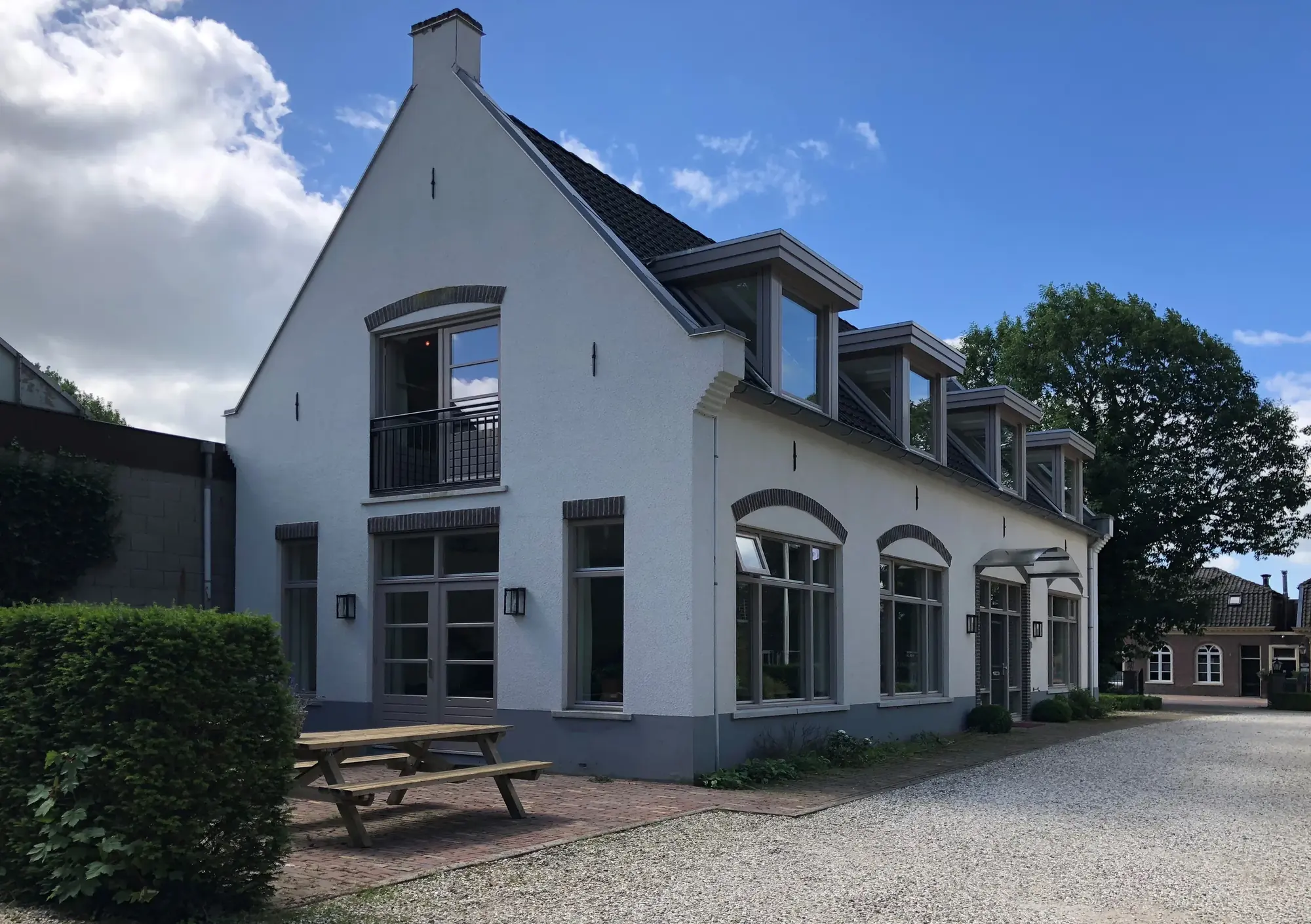
Organisation
For commercial and procurement leaders
Organisations negotiate all the time, and together those negotiations shape their strategy and their results. Sales and procurement teams agree prices, volumes, terms and renewals, often with the same customers and suppliers year after year. Writing in Harvard Business Review, Ertel observed that few companies look at their negotiations as a whole: each one tends to be treated as a separate event, with its own goals and measures of success.
Training builds negotiation skill. Whether people use it has a lot to do with the organisation around them. A review of 89 studies links a supportive work environment to people applying what they learned in training. In a survey across 150 organisations, training professionals estimated that 62 percent of employees apply what they learned right away and 34 percent still do a year later. Activities at work before and after the training were more strongly related to its use than activities during it. For negotiation, FP&P looks at concrete conditions: time to prepare, a clear mandate, a shared way of working and the habit of looking back on a deal.
How does an organisation make sure its negotiating skill is used in every negotiation that matters?
FP&P works on the conditions around the negotiator, in three steps that build on each other. The Scan shows how the organisation negotiates today. Support helps a team in a negotiation that is happening now. Architecture puts in place what keeps working after the engagement. When the question is about people's skills, training is the better fit: see Training further down.
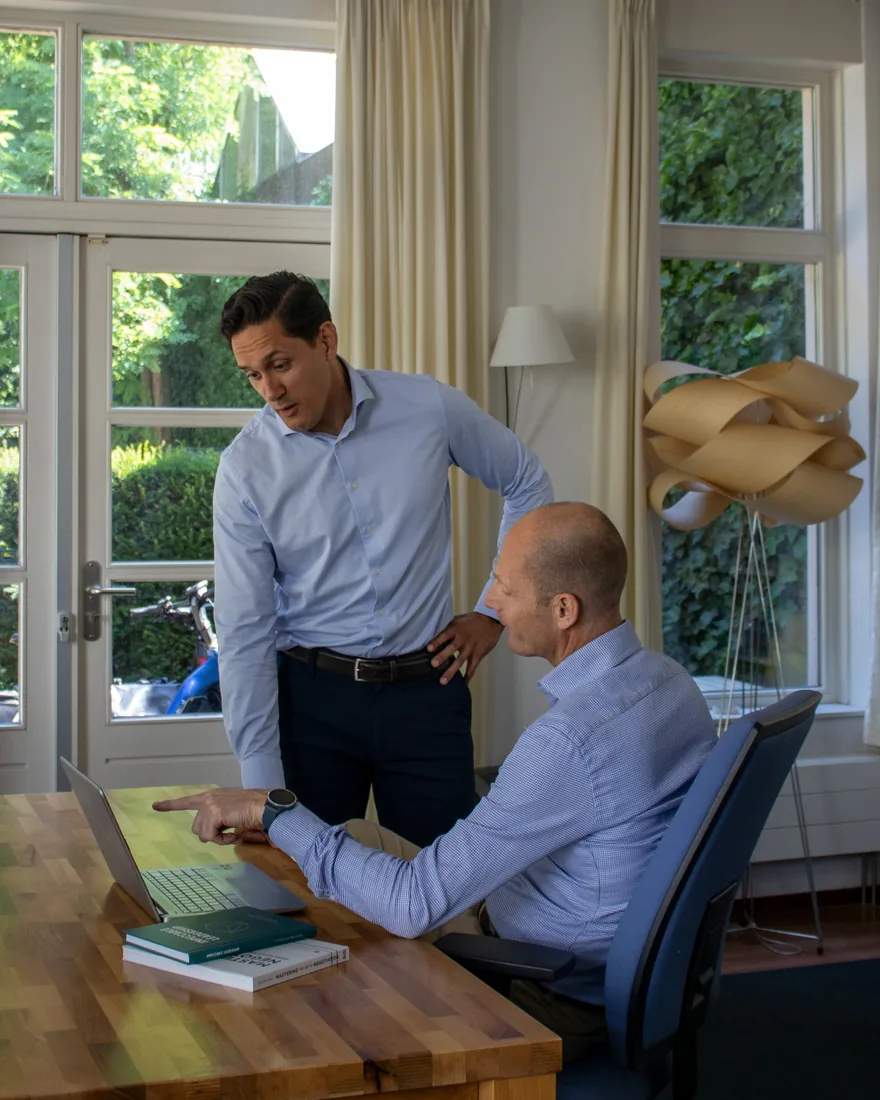
How your organisation negotiates, along five dimensions
Strong individual negotiators are easy to name. How the organisation negotiates as a whole is much harder to see.
The Scan measures it from the board to the buyers, along the five dimensions below, and shows where groups see things differently. That is worth knowing: the climate for using what people learned can differ from one unit to the next, and in research it relates to how well they apply it.
At the end you have a climate profile per dimension and per group, a report of 30 to 40 pages, a one-page roadmap with an owner for each step, and a 90-minute session with the board.
Ten weeks, for the board and the owners of each step.
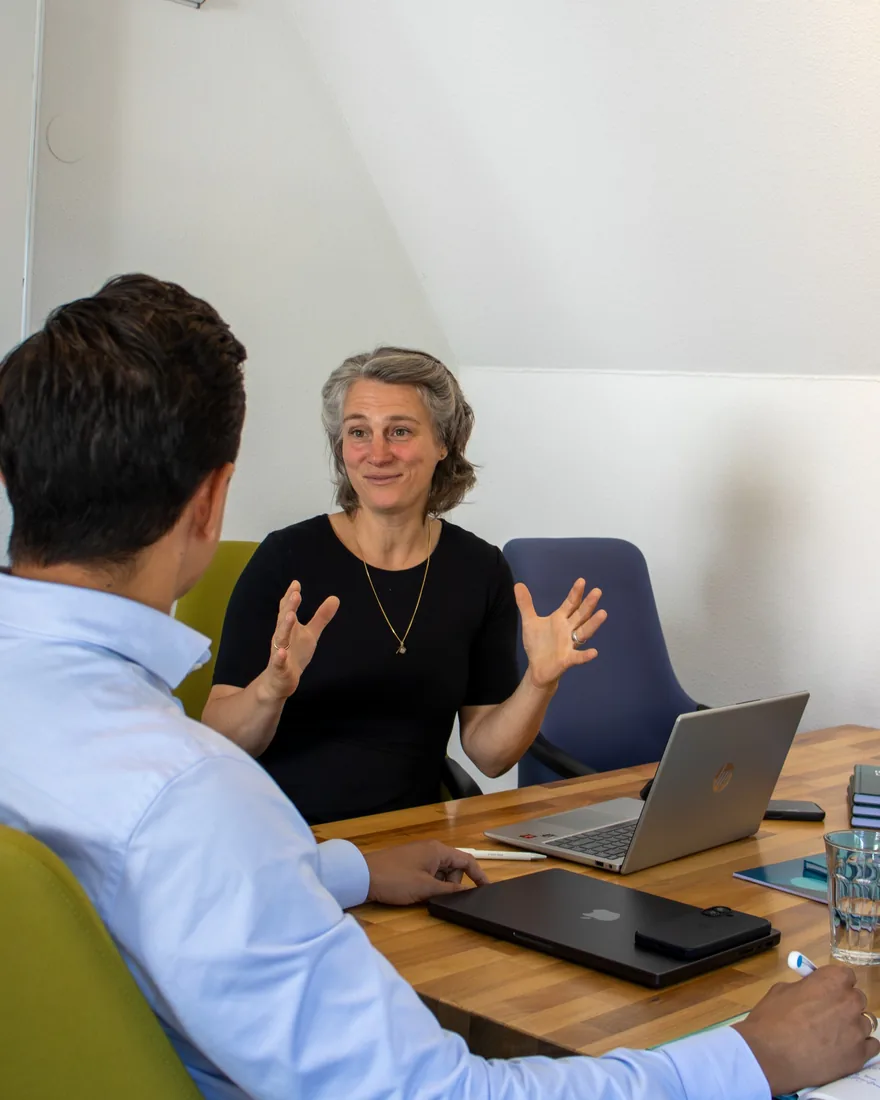
Alongside your team in a live negotiation, from preparation to evaluation
Important negotiations often come with little time to prepare and a lot at stake.
Support works through one real negotiation with the team that leads it: interests, options and scenarios worked out in advance, a dress rehearsal of the key moments, coaching behind the table or at it, and an independent second opinion before signing. In one set of experiments, negotiators who learned by watching others or by comparing cases reached better outcomes for both sides than those who learned from experience alone.
The team learns the approach on a negotiation that counts, and keeps the preparation for the next one.
During a live deal, for the deal team.
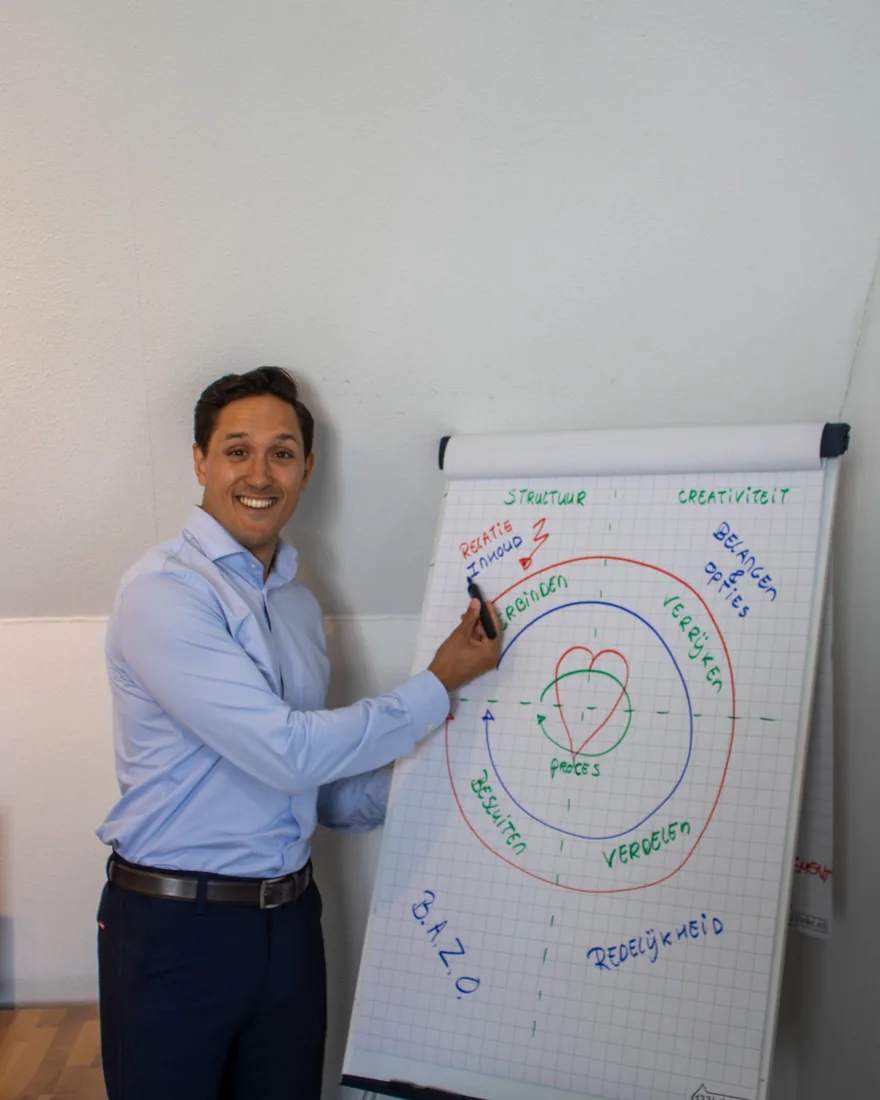
Mandates, ways of working and lessons that stay in place
When the way of negotiating lives in a few people's heads, it leaves with them, and each new team starts again.
Architecture sets up, with the people who do the work, an operating model with phases, roles, mandates and decision rights; a playbook for each type of negotiation that recurs; a preparation canvas and a mandate template; and a rhythm of evaluations whose lessons go back into the playbooks. In an experiment, negotiators who had to account for how they negotiated reached agreements with more joint value for both sides.
What the organisation learns in one negotiation is then available in the next.
When setting up or changing how a team negotiates, for teams and their leaders.
Sources: Ertel (1999), Harvard Business Review; Blume et al. (2010); Saks & Belcourt (2006); Rouiller & Goldstein (1993); Nadler, Thompson & Van Boven (2003); De Dreu, Koole & Steinel (2000).
Five dimensions around the negotiator, measured from the board to the buyers.
Training
A programme built around your team's own negotiations, or FP&P's open training for professionals who negotiate.
Team
FP&P's custom negotiation training, built around your team's own negotiations and material: mostly practice, in groups of 6 to 9, in English or Dutch.
See the custom programme at FP&P

Individual
FP&P's open training for professionals who negotiate: four days in two blocks of two, in a group of 12.
See dates and enrol at FP&PRequest a free, no-obligation first conversation through FP&P's appointment page. Mention David C. van der Griend in your request.
